
.avif)
Leadership development coaching
Help your leaders thrive under pressure
Embed coaching in daily work to support resilience and performance, even under uncertainty.



Why leadership development often falls short
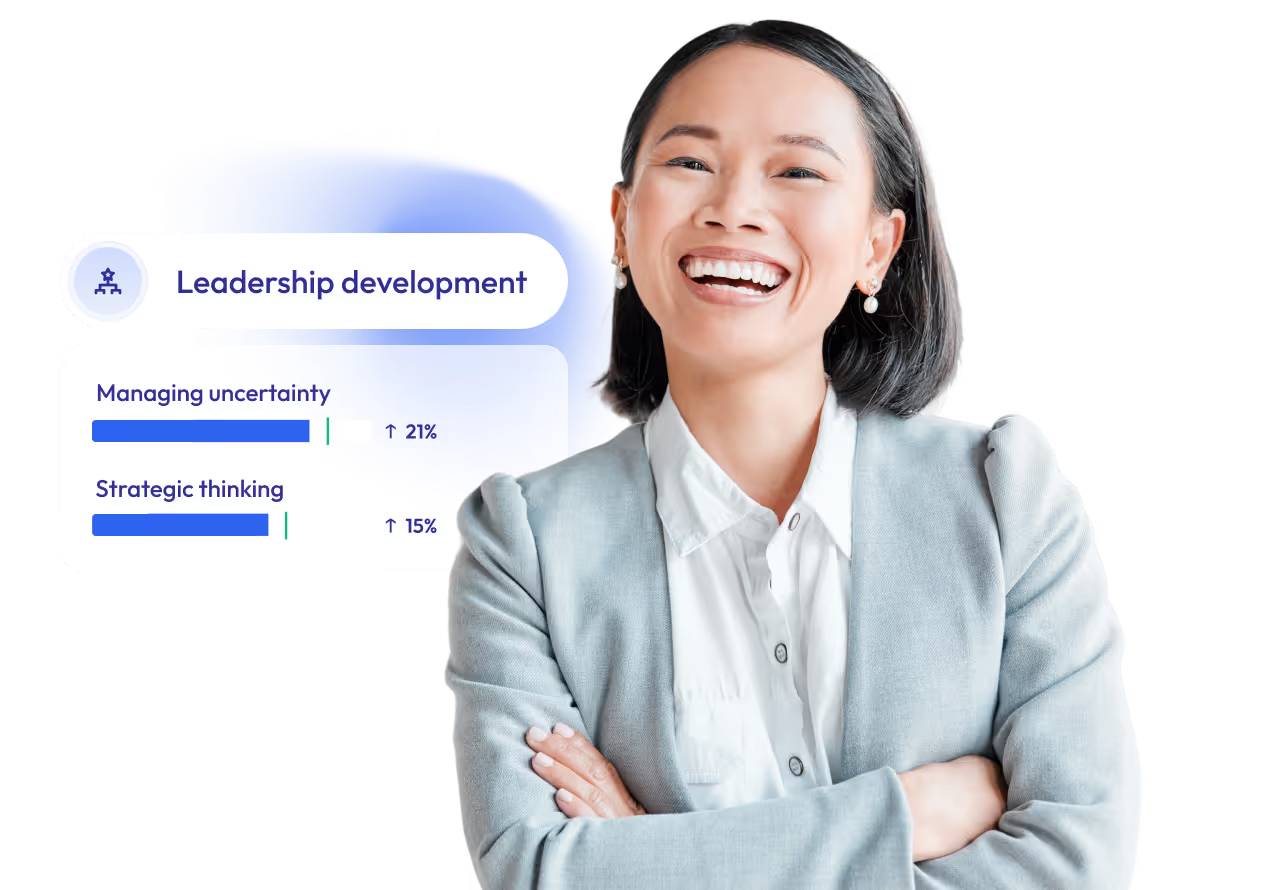
- Uncertainty triggers default leadership habits
- Training informs, coaching changes behaviours
- Middle managers are key to execution

Where leadership behaviour change begins
Access the top 5% of coaches
Because coach quality determines outcome quality.
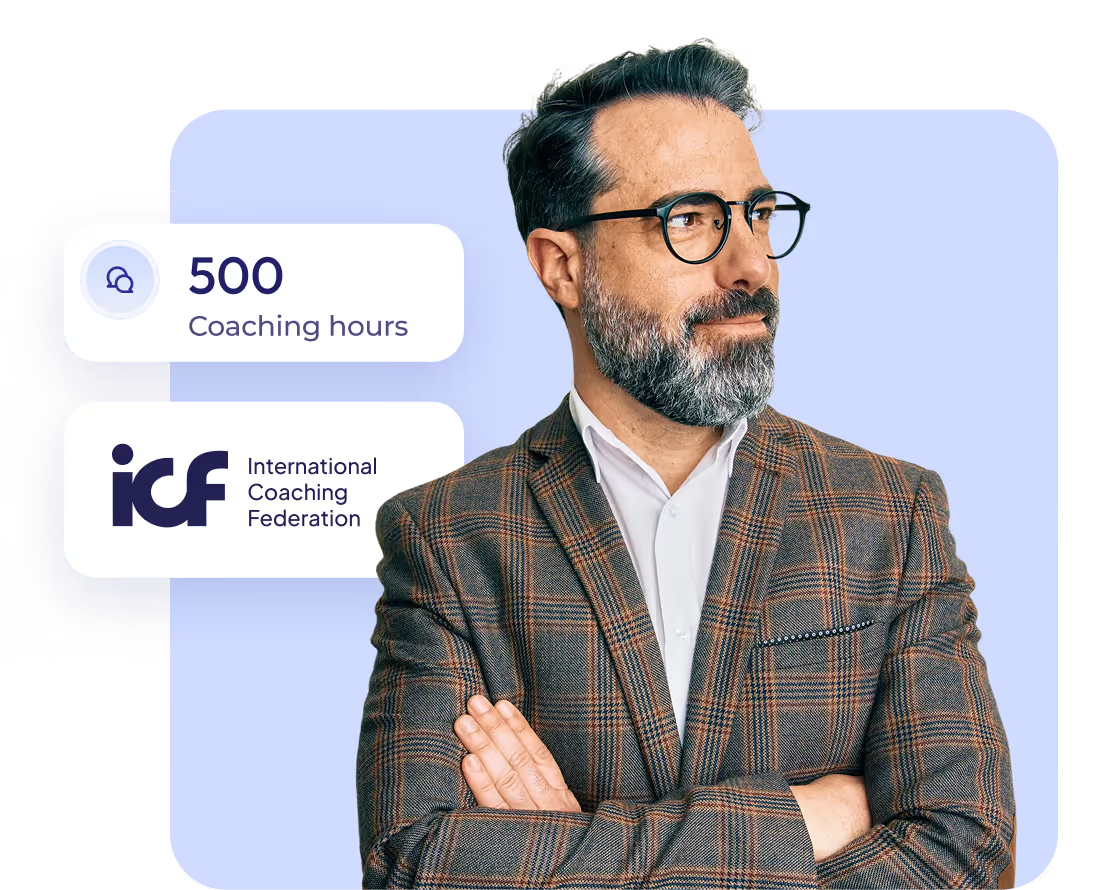
Leaders are matched with ICF-certified coaches (500+ coaching hours and 6+ years of leadership experience), who fit each leader's context to drive lasting behaviour change.
Scale coaching, retain quality
Because behaviour change requires consistency.
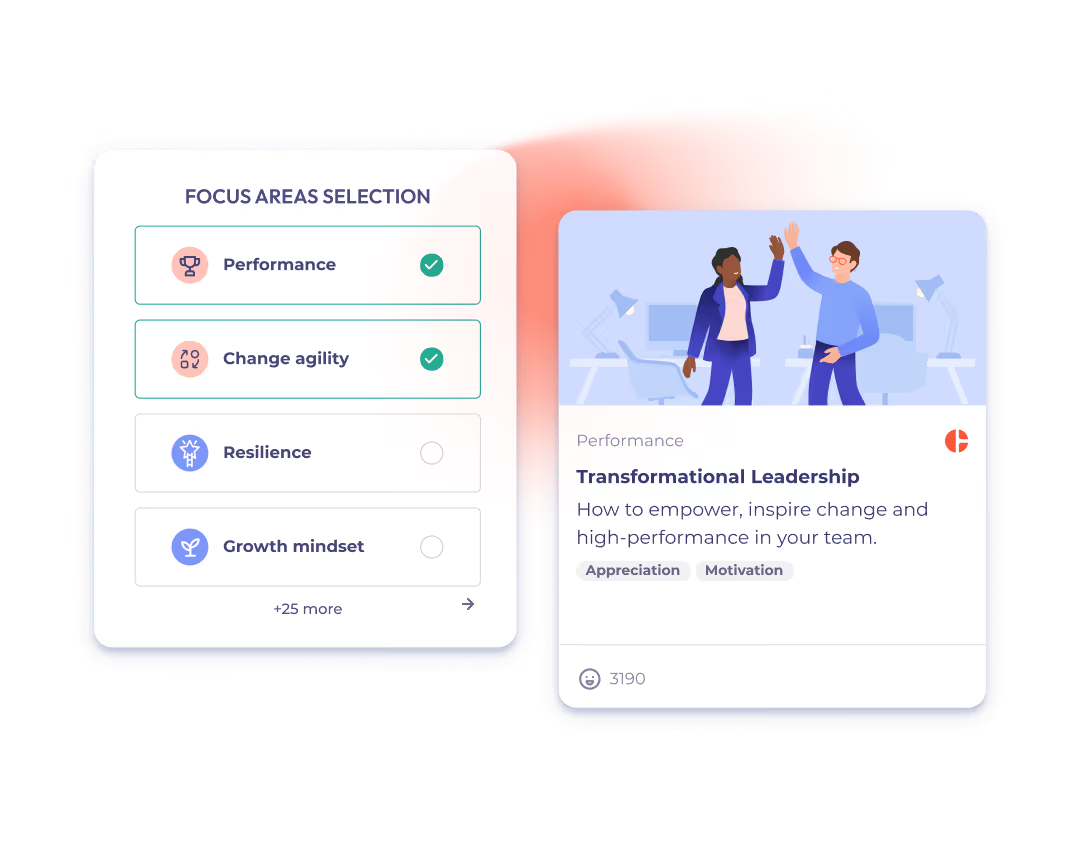
Give every leader a structured and personalised coaching journey across 90+ countries and 70+ languages, designed to track progress and embed lasting behaviour change.
Measure behaviour change, track business outcome
Because what gets measured gets improved.
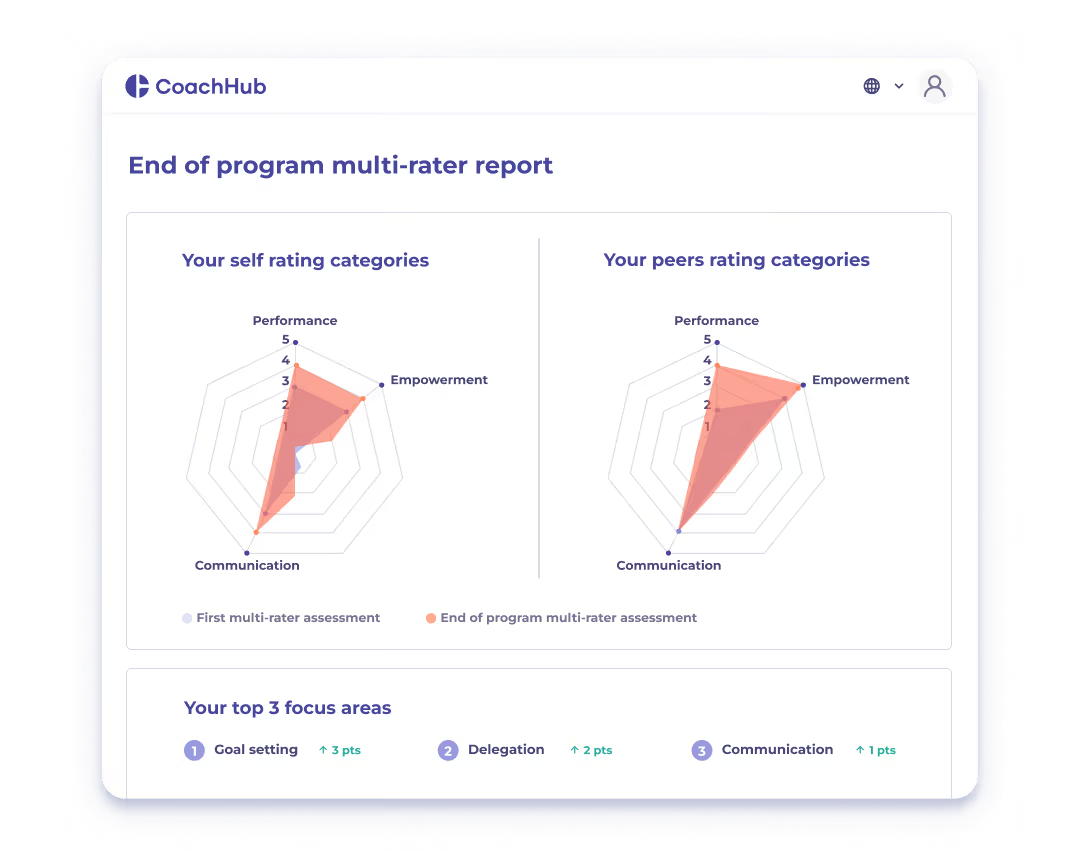
Track behaviour change and early execution signals, then follow them through to measurable business outcomes, like strategic KPI improvement or stronger team execution.
Invest in your leaders to accelerate business outcomes


Coaching for middle managers and high potentials
Middle managers have become the liaison between line employees and business leaders. Their future leader prospect and vital positions have made retention all the more important.


.avif)




Top 10 questions about leadership development
Leadership development is the ongoing process of building the capabilities and behaviours that enable leaders to translate strategy into consistent execution.
In uncertain environments, the most critical leadership competencies go beyond technical expertise. According to Ronald Heifetz's Adaptive Leadership framework, the competencies that matter most under pressure are: empathy and emotional intelligence to build trust, character to engage in tough conversations and a commitment to continuous learning.
These skills represent the adaptive capabilities that determine whether leadership holds when conditions keep changing.
The most effective way to develop leadership skills is to embed development in the flow of work, where decisions are actually made.
Research confirms that capability change requires experience, reflection and experimentation, not just knowledge transfer. Indeed, real skill development happens through repeated practice and feedback tied to live business situations.
Coaching creates that structured feedback loop, reinforcing new behaviours until they become execution discipline. Organisations that embed coaching into daily work see stronger decision quality, faster behaviour change and more consistent execution across every leadership level.
Leadership coaching is a personalised, ongoing development process that focuses on changing behaviours in real business situations, rather than transferring knowledge in classroom format.
Unlike training, coaching creates psychological safety, builds self-awareness and gives leaders the time and space to develop the adaptive capabilities they need to navigate uncertainty and lead with consistency.
Training focuses on transferring knowledge, while coaching focuses on changing behaviours.
Training is event-based, one-to-many and measured by attendance or satisfaction. Instead, business coaching is ongoing, personalised and measured by behaviour shifts and performance outcomes. That’s why the Kirkpatrick Model of learning evaluation places behaviour change above knowledge as the true measure of development effectiveness.
In an environment where execution instability is a real business risk, the difference between training and coaching is the difference between leaders who know what to do and leaders who actually do it differently.
Most leadership development programmes fail because they do not account for what happens when leaders return to work, after the training.
Indeed, Kahneman's research on cognitive load demonstrates that under pressure, decision quality deteriorates and people tend revert to familiar patterns.
According to research by Grant (2014), coaching prevents programme failure by embedding development in the flow of work, creating a structured feedback loop that reinforces new behaviours over time and turns short-term inspiration into lasting execution discipline.
Leadership performance is usually shaped across every level of leadership:
- First-time managers influence daily team productivity and engagement
- Middle managers translate strategy into coordinated execution
- Senior leaders define strategic direction and drive enterprise alignment
But two main populations have an outsized impact on execution quality: senior leaders and middle managers.
Senior leaders are the organisational pathfinders: in times of uncertainty, the quality of their thinking directly predicts success or failure. They need to look at the bigger picture and identify patterns before acting.
Coaching helps them build the clarity and decision confidence required to guide the organisation through uncertainty.
Middle managers are the organisational amplifier: they account for roughly 70% of how strategy is translated into action (McKinsey). They are the bridge between senior leadership strategy and frontline operations. When they are overwhelmed or unclear, friction multiplies across teams and execution slows system-wide.
Coaching helps them clarify priorities, create the psychological safety their teams need to perform and stay adaptive when complexity pushes them toward purely technical responses.
Executive leadership coaching is a personalised coaching process designed for senior leaders navigating complex, high-stakes decisions.
It matters most in times of uncertainty, when the quality of thinking at the top directly predicts organisational success or failure.
With CoachHub Executive™, organisations can partner with CoachHub to support their executives, who require highly specialised, expert coaching in times of uncertainty.
When leadership development is coaching-based and embedded at scale, the benefits show up at two levels.
Early execution signals appear first: faster and higher-quality decisions, stronger goal progress, greater change readiness and clearer alignment across teams. This is relevant, because McKinsey's research links decision speed and quality directly to organisational performance.
Over time, these early signals translate into measurable business outcomes including more reliable team execution, improvement in strategic KPIs, stronger cross-team coordination and higher employee engagement with reduced attrition.
A leadership development programme that drives impact is built around four principles:
- Coach quality: leaders must be matched with certified, experienced coaches who understand their specific context and goals.
- Structure: coaching phases must be clearly defined and aligned to business priorities, not delivered as isolated sessions.
- Scale: the programme must reach every leadership level consistently across regions and languages.
- Measurement: impact must be tracked through both leading and lagging indicators, following the Kirkpatrick Model.
With over 1,000 Enterprise organisations supported globally, CoachHub delivers on all four principles: expert coach matching, structured journeys, global scale across 90+ countries and 70+ languages, and built-in measurement from behaviour change to business outcomes.
Measuring success requires tracking both leading and lagging indicators.
Leading indicators are the early behavioral signals that show coaching is working: faster decisions, stronger goal progress, greater change readiness and clearer team alignment.
Lagging indicators follow over time and include more reliable team execution, improvement in strategic KPIs, higher employee engagement and reduced attrition.
For a successful leadership development programme, measurement must be built into the program design from the start to demonstrate the impact needed to secure continued investment in leadership development.


Trying to solve a different challenge?

Executive Coaching
Equip executives with the tools they need to unlock their leadership potential.

Talent development
Transform your workforce into high-performing, inspiring and resilient leaders.